

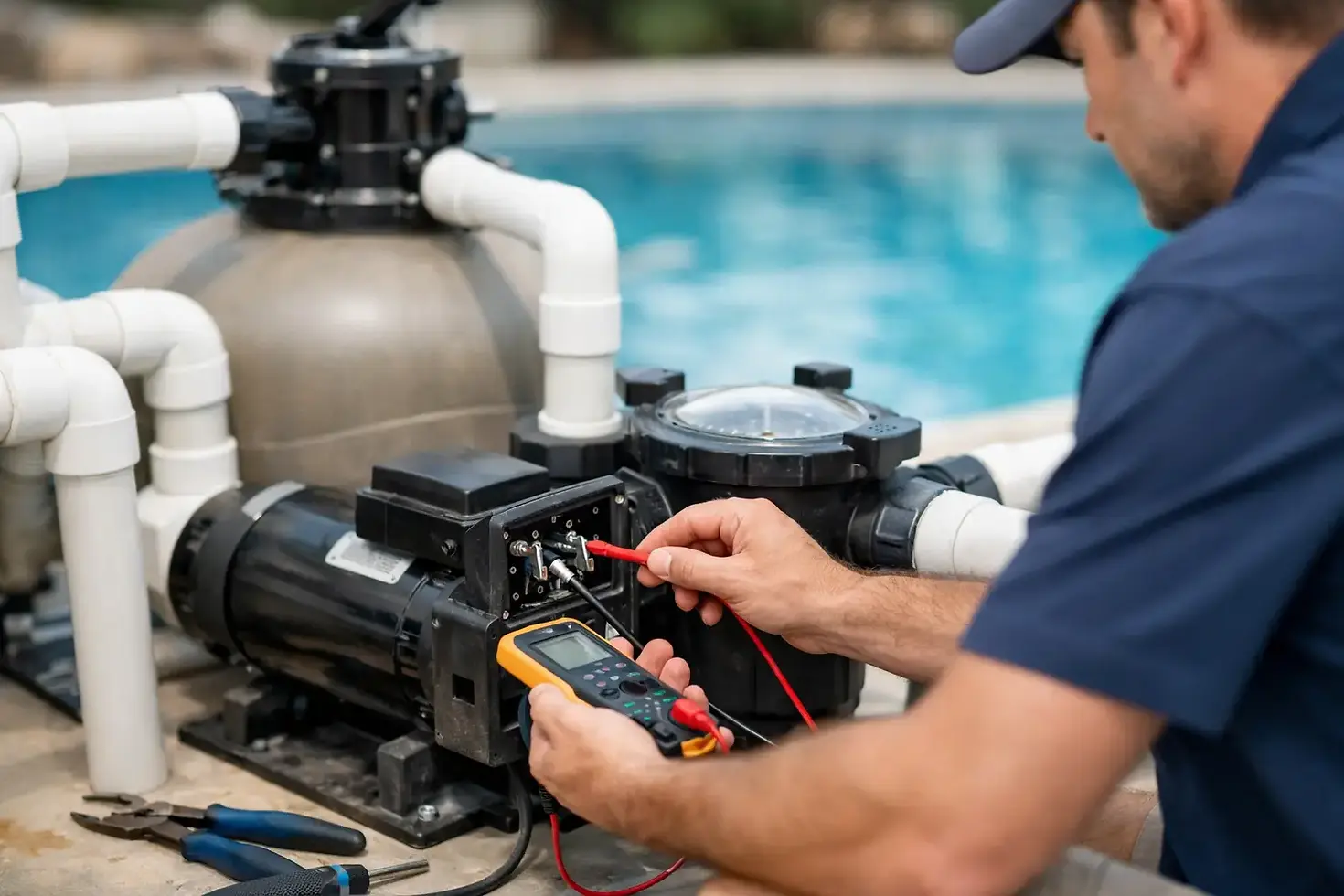
Pool Pump Troubleshooting Guide for Common Faults
- shaun8275
- Jul 27
- 7 min read
A pool that has suddenly gone quiet, stopped circulating, or begun making an unfamiliar noise is more than an inconvenience. Poor circulation can quickly affect water quality, place unnecessary strain on expensive equipment, and leave you wondering what to do next. This pool pump troubleshooting guide will help you check the simple causes first, recognise common warning signs, and know when it's time to call in the professionals.
With more than 30 years of experience in the swimming pool and spa industry across the Gold Coast, Toowoomba, and the Darling Downs, Ledrex Electrical understands what it takes to keep your pool running efficiently year-round. As the authorised Waterco distributor for Toowoomba and the Darling Downs, we supply quality pool equipment, parts, and expert advice backed by decades of industry knowledge.
Whether you need help diagnosing a faulty pool pump, servicing your equipment, or replacing worn components, our experienced team is here to help. Contact Ledrex Electrical to keep your pool equipment in top condition and your pool looking crystal clear, clean, and ready to enjoy.
Start safely before checking your pool pump
Pool equipment combines water, electrical wiring and moving parts, so safety comes first. Switch the pump off at the isolator or pool equipment switch before opening the pump lid, removing baskets or inspecting connections. Do not handle damaged cables, remove electrical covers or attempt repairs inside the motor, timer or switchboard.
If there is a burning smell, visible smoke, repeated tripping at the safety switch, water inside electrical equipment, or an exposed wire, leave the system switched off. These faults need assessment by a licenced electrician or qualified pool equipment technician. Resetting a tripped safety switch repeatedly is not a fix - it can hide a dangerous fault.
For less urgent issues, work methodically. Check one thing at a time, then restore power and observe the pump from a safe, dry position. This approach avoids changing several variables at once and makes the actual cause easier to identify.
Pool pump will not start
When a pump does nothing at all, begin with the power supply. Confirm that the pool isolator is switched on, the timer is within its programmed run period and no circuit breaker or safety switch has tripped. Timers can be set incorrectly after a power outage, daylight saving adjustment or battery failure, particularly on older equipment.
If the circuit is on but the pump is silent, inspect the visible condition of the power lead and plug, where applicable. Look for cracking, heat marks or signs of moisture around the connection. Do not touch a damaged lead or try to tape it up. Pool pumps are exposed to weather, heat and chlorinated air, and electrical connections can deteriorate over time.
A humming pump that does not turn is a different problem. It may have a seized motor, a failed capacitor or debris preventing the impeller from moving. Turn the power off before checking the pump basket for obvious blockage. If the basket is clear and the pump still hums without starting, avoid repeated attempts. Continued starting attempts can overheat and damage the motor.
When the safety switch keeps tripping
A safety switch trips because it has detected electricity flowing where it should not. Moisture in a motor, damaged insulation, a failing capacitor, faulty wiring or another appliance on the same circuit may be responsible. A storm or heavy rain can make an existing weakness more apparent, but rain is not necessarily the root cause.
Try resetting the safety switch once after making sure the pool area is dry and no obvious damage is present. If it trips again when the pump starts, turn the pump off and arrange an electrical inspection. This is not a fault to work around by using an extension lead or bypassing equipment.
Pump is running but water is not circulating
A running motor does not always mean water is moving properly. Low flow is often caused by a blockage, an air leak or a filter that needs cleaning. Start with the easy checks: empty the skimmer basket, clean the pump basket and make sure the pool water level sits roughly halfway up the skimmer opening. A low water level lets air enter the suction line and interrupts the flow to the pump.
Next, look through the clear pump lid while the pump is operating. A properly primed pump should be mostly full of water, with little or no persistent air visible. A large air pocket, bubbles returning to the pool or a basket that will not fill can point to a suction-side air leak.
Check that the pump lid is clean, correctly seated and fitted with an undamaged O-ring. A dry, flattened or cracked O-ring can draw air in without necessarily leaking water out. Clean it, apply an appropriate silicone-based lubricant if recommended by the manufacturer, and refit the lid evenly. Also check visible valve settings. A closed suction valve or a valve left in the wrong position after vacuuming can restrict flow immediately.
If flow remains poor, the filter may be dirty. The right action depends on whether you have a cartridge, sand or media filter. Cartridges need careful cleaning, while sand and media filters may need backwashing according to the manufacturer’s instructions. Over-cleaning or excessive backwashing can be counterproductive, so follow your equipment manual rather than guessing.
Pool pump loses prime or sucks in air
A pump that works briefly then loses prime often has a leak on the suction side, before water reaches the pump. Because this part of the pipework runs under vacuum while the pump is operating, it may draw air in without leaving a visible puddle.
Common causes include a loose pump lid, worn lid O-ring, cracked union, damaged valve seal or low pool water level. Start with the pump lid and basket housing because they are accessible and commonly affected by debris. Clean the sealing surfaces, check the O-ring condition and ensure unions are hand-tight rather than overtightened.
It can also be normal to see a small number of bubbles at a return outlet just after the pump is restarted or after a basket is emptied. Persistent bubbles, noticeably reduced pressure or a pump basket that repeatedly empties are different. They warrant further investigation before the pump is allowed to run dry.
Running dry can damage seals and create more costly repairs. If the pump cannot hold water after the basic checks, switch it off rather than leaving it to run through its scheduled cycle.
Noisy pool pump troubleshooting guide
The sound a pump makes can provide useful clues. A rattle may be leaves or small debris in the basket. A gurgling sound usually suggests air in the system. A high-pitched whine, grinding or metal-on-metal noise can indicate worn bearings or an internal motor issue.
Vibration is worth checking too. Make sure the pump is sitting securely on its base and that visible pipework is supported. Loose mounting bolts, a cracked base or pipework pressing against the pump can create noise and stress fittings over time. Do not attempt to dismantle the motor to investigate bearings or the impeller.
Some pump noise is unavoidable, especially with older single-speed units. However, a sudden change in sound should not be ignored. A motor that has become much louder, hotter or less effective may be nearing failure. Early assessment gives you more control over repair or replacement options, rather than being left with a green pool in the middle of summer.
Pump runs but pressure is too high or too low
The pressure gauge on the filter is a useful reference, but there is no single correct number for every pool. The key figure is your system’s normal clean-filter pressure. Make a note of it after the filter has been serviced and the system is running well.
Higher-than-normal pressure usually means water is struggling to pass through the filter or return line. A dirty filter, closed return valve or blocked return fitting are possible causes. Lower-than-normal pressure can suggest a suction blockage, air leak, low pool water level or a pump that is not moving water efficiently.
Pressure problems can overlap. For example, a heavily blocked skimmer basket may reduce flow, while a neglected filter may increase pressure. Clean the baskets first, confirm valve positions and service the filter in line with its instructions. If the gauge reading remains unusual or the water flow is weak, professional testing can identify whether the issue sits with the pump, plumbing or filter.
Check the timer and daily run time
Sometimes the equipment is healthy but the programming is not. A timer may have lost its setting after a blackout, or its clock may simply be wrong. Check the current time, start and stop times, and whether any manual override has been left on or off.
There is no universal daily run time. It depends on pool size, bather load, pump type, season, water temperature and how much debris reaches the pool. In a hot Toowoomba summer, a pool may need more circulation than it does through a mild winter period. Short run times can leave chlorine unevenly distributed and make algae harder to control, while excessively long run times add wear and energy costs.
If you are changing run times, make small adjustments and monitor water clarity and chemical balance. A pool shop can assist with water testing, while a pool equipment professional can advise on circulation and pump performance.
When to call a professional
Basic cleaning and visible checks are sensible homeowner maintenance. Electrical faults, motor repairs, leaking seals, damaged plumbing and recurring circulation problems are not worth guessing at. Calling early can protect the pump, reduce downtime and prevent a minor fault becoming a replacement job.
LedRex Electrical can assist pool owners across Toowoomba and surrounding areas with specialist pool equipment and electrical work, including faults involving power supply, pool lights and related equipment. Clear advice matters: sometimes a simple service is enough; other times an ageing pump is better replaced with a more efficient model.
Keep the pump basket clear, watch for changes in sound or flow, and act promptly when a safety switch trips. Your pool equipment should run quietly and reliably in the background - not become another weekend job that keeps coming back.


Comments