

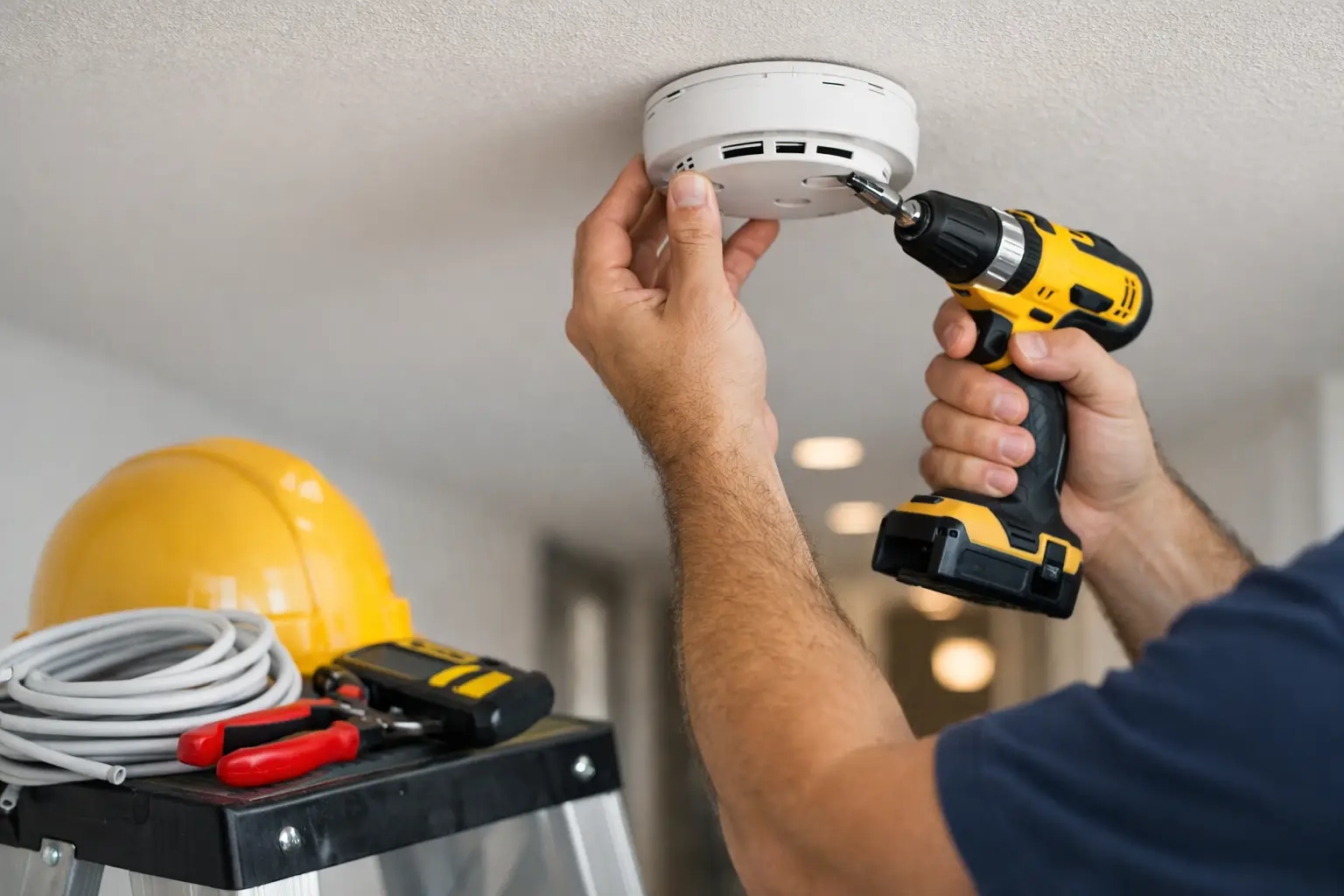
Smoke Alarm Installation Requirements Explained
Nothing feels more frustrating than thinking a home is safe, only to find the smoke alarms are in the wrong spots, too old, or no longer compliant. Smoke alarm installation requirements are not just a box-ticking exercise - they affect how quickly people are alerted in the first moments of a fire, when every second matters.
For homeowners, landlords and renovators across Toowoomba and regional Queensland, the challenge is usually not whether smoke alarms are needed. It is knowing what type is required, where it has to go, and when an upgrade is no longer optional. The rules can seem simple on the surface, but the details matter.
What smoke alarm installation requirements actually cover
When people talk about smoke alarm rules, they often focus only on whether an alarm is present. In practice, smoke alarm installation requirements usually cover the alarm type, its power source, how alarms are connected, their placement, and whether the property’s age or renovation status changes the standard.
That is where confusion starts. An older home may have alarms installed years ago that were acceptable at the time, but current requirements can be different. A rental property can also have stricter expectations around compliance and maintenance than an owner-occupied home.
In Queensland, the shift towards interconnected photoelectric smoke alarms has changed what many homes need. If one alarm activates, the others should sound as well. That makes a real difference at night, especially in larger homes where someone sleeping at the back of the house may not hear a single alarm near the kitchen or hallway.
Smoke alarm installation requirements in Queensland homes
For most Queensland homes, modern compliance centres on photoelectric smoke alarms that meet the relevant Australian Standard, are less than 10 years old, and are interconnected. They also need to be hardwired to the mains power supply in many situations, although there are some exceptions depending on the property and the installation conditions.
Placement is just as important as the alarm itself. Smoke alarms are generally required on each storey, in every bedroom, in hallways that connect bedrooms to the rest of the home, and in some cases in areas between bedrooms and the rest of the house if no hallway exists. In practical terms, that means a small older home that once had a single hallway alarm may now need several alarms to meet the standard.
This catches people out during sales, leasing, renovations and insurance discussions. A house can look tidy and well maintained but still fall short because the alarms are not interconnected or are located in places that do not give the earliest warning.
Why location matters more than people expect
A smoke alarm installed a few metres away from the ideal position might still make noise, but that does not mean it will perform as intended. Smoke travels in ways that are affected by ceilings, walls, air movement and room layout. Good placement improves early detection and reduces the chance of delayed warning.
That is why alarms are usually installed on the ceiling, not on a wall unless specific conditions allow for it. They also need clearance from corners, light fittings, ceiling fans and air conditioning vents. Put an alarm too close to a supply air vent and airflow can interfere with smoke reaching the sensor quickly.
Kitchens and bathrooms create another balancing act. Place alarms too close and nuisance alarms become common, which can tempt people to disable them. Put them too far away and you lose precious warning time. The right approach depends on the room layout and how the home is used, which is why straightforward advice from a licensed electrician is worth having.
New builds, renovations and existing homes
Not every property faces the same trigger point for upgrades. A newly built home will usually need to meet the current standard from the outset. Major renovations can also trigger updated smoke alarm requirements, particularly where electrical work forms part of the project.
Existing homes that are not being renovated may still have deadlines or obligations depending on whether they are owner-occupied, sold, or leased. Landlords need to be especially careful here. A rental property has a higher compliance risk because smoke alarms must not only be correctly installed but also properly maintained between tenancies and over time.
For renovators, the key issue is planning early. Smoke alarm upgrades are often treated as a late-stage add-on, but they should be considered while electrical layouts are being designed. That keeps the work cleaner, faster and more cost-effective than trying to retrofit everything after plastering, painting or cabinetry is finished.
Hardwired or battery powered?
This is one of the most common questions, and the answer is usually: it depends on the property and the work being carried out. In many Queensland compliance scenarios, hardwired photoelectric alarms with battery backup are the preferred solution because they provide a more reliable ongoing power source while still operating during a blackout.
Battery-powered alarms may still be acceptable in some limited circumstances, but relying on them when hardwiring is expected can create compliance issues. There is also the practical side to consider. Batteries can be removed, forgotten, or left flat. A hardwired interconnected system reduces that risk.
For many households, the best outcome is not just doing the minimum required, but installing a setup that is dependable and simple to live with. That matters most in family homes, investment properties and houses with elderly residents or children, where confidence in the system is just as important as technical compliance.
The role of interconnection
Interconnection is a major part of current smoke alarm installation requirements, and for good reason. If a fire starts in a lounge room, garage-adjacent area or downstairs living space, the people upstairs or in rear bedrooms need to hear the alarm immediately.
Standalone alarms do not provide that whole-of-home warning. Interconnected alarms do. In real terms, that can mean the difference between waking early enough to respond safely and losing valuable time.
There are wired and wireless interconnection options, and the right choice depends on the building, access, and budget. Wireless interconnection can be a practical option in existing homes where running new cabling would be disruptive. Hardwired interconnection may be the better fit in new builds or major renovations. Neither option is automatically best in every case, which is why site-specific advice matters.
Smoke alarm maintenance is part of compliance
Installation is only half the job. Smoke alarms need testing, cleaning and replacement at the right intervals. Even a compliant system can become non-compliant if alarms age past their service life, fail testing, or are damaged by dust, insects or moisture.
Most smoke alarms have a maximum service life of 10 years. That date is easy to overlook, especially in properties where alarms were installed by a previous owner. If the units are approaching that age, replacement is often the safest and simplest path.
Property owners should also know that repeated false alarms are not something to ignore. They can point to poor placement, unsuitable alarm type, contamination inside the unit, or a fault developing in the system. A proper check can often solve the problem before it becomes a bigger safety issue.
Common mistakes property owners make
The biggest mistake is assuming any smoke alarm is good enough. It is not. A cheap replacement bought in a hurry may not match what the property actually requires.
Another common issue is partial upgrades. People replace one failed alarm but leave the rest of the system outdated, non-matching or non-interconnected. That can create a patchwork setup that still falls short.
The third issue is leaving compliance checks until the last minute before a sale, new tenancy or final renovation inspection. At that stage, rushed decisions can lead to avoidable delays. Getting the alarms assessed early gives you room to fix the right things properly.
When it makes sense to get professional help
If you are unsure whether your home, rental or commercial property meets current smoke alarm installation requirements, guessing is risky. The right installation is about more than sticking alarms to a ceiling. It needs the correct product, the correct location, the correct wiring approach and the correct level of interconnection.
That is where an experienced local electrician can save time and stress. For property owners in Toowoomba and surrounding areas, having someone assess the layout and explain the options in plain English makes the process far easier. LedRex Electrical works with homeowners, landlords and renovators who want clear advice, reliable workmanship and no unnecessary run-around.
The best time to deal with smoke alarms is before they become an urgent problem. A proper check now can mean better safety, smoother compliance and one less thing to worry about when the property is sold, leased or upgraded.
If there is any doubt about your current setup, treat that as a sign to get it looked at. Smoke alarms are one of the few safety systems in a property that you hope never gets tested in a real emergency - but if it does, it needs to work exactly as it should.


Comments